Putting someone else first usually feels normal, loving, and responsible. But over time, you might notice that you’ve quietly lost touch with parts of yourself.
If you’ve ever questioned whether you’re losing yourself in a relationship, these signs can help you see what’s really going on.

Are You Centering Him Instead of Yourself?
1. Checking His Mood First
When you walk into a room, you immediately notice his mood. If he seems quiet, tense, or distant, you focus on trying to manage it. Your own feelings take a back seat.
2. Explaining Your Boundaries
Instead of simply saying “no,” you explain, justify, and try to soften the message. You hope he’ll understand so well that he won’t get upset.
3. Making His Disappointment Your Responsibility
If he’s upset, withdrawn, or irritated, you automatically try to fix things, even when you haven’t done anything wrong.
4. Adjusting Your Preferences to Avoid Friction
You compromise quickly on things like where to eat, how often to talk, or when to define the relationship, sometimes even before he brings it up.

5. Minimizing What Bothers You
You turn patterns that deserve attention into something that seems less important. For instance:-
- “It’s not that bad.”
- “He didn’t mean it.”
- “I’m probably overthinking.”
6. Waiting for Reassurance
Instead of looking at how he acts over time, you focus on what he says when you feel close. For a while, his words matter more than the bigger picture.
7. Your Mood is Based on His Responsiveness
A quick reply makes you feel better. Silence makes you anxious. His attention starts to feel like the measure of your stability.
8. You Over-function Emotionally
You start tough conversations, calm things down after arguments, anticipate his needs, and watch your tone. You do the unseen work to keep everything operating smoothly.
9. Scared to Ask for Transparency
You worry about coming across as needy, demanding, or dramatic. So instead of asking directly, you wait and hope things will make sense on their own.
10. You Measure Your worth by Being Chosen
You start to see his desire as proof of your worth. When his attention fades, your self-doubt grows.
11. You Care About Preserving the Relationship More
This is the hardest sign to notice. It can feel mature and loyal. But if being connected always means shrinking, changing, or ignoring your own needs, something isn’t right.
What Centering Yourself Should Look Like
Centering yourself means being rooted in your own experience while still being part of the relationship, and this is what it looks like:-
- Letting him be disappointed.
- Trusting patterns over promises.
- Saying what works for you without over-translating it.
- Observing consistency instead of chasing reassurance.
- Choosing steadiness over intensity.
When you put yourself back at the center, things become clearer. You feel less confused, and your decisions are less reactive.
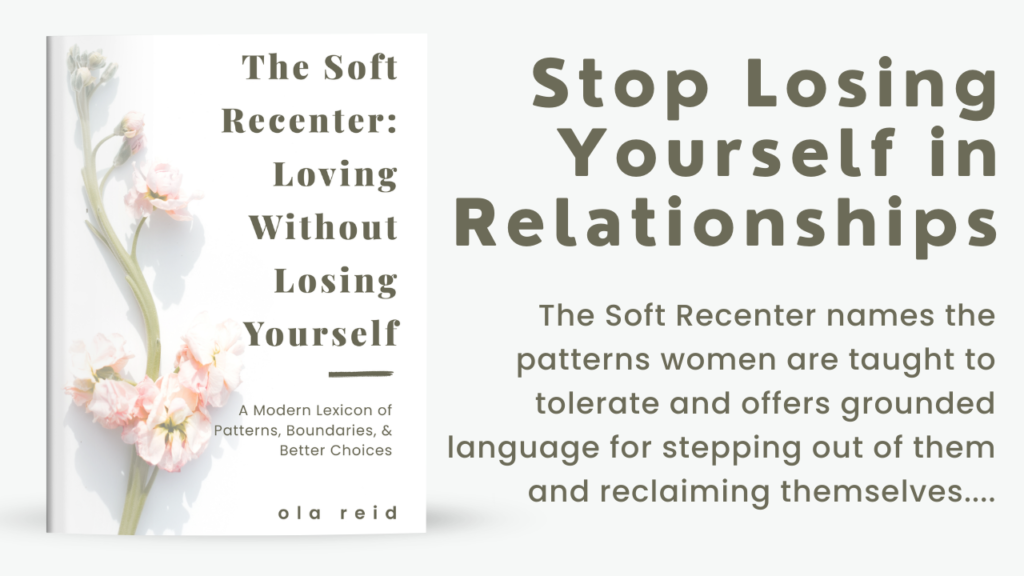
If this feels familiar, The Soft Recenter: Loving Without Losing Yourself takes a deeper look at these patterns and gives you practical ways to shift the balance without losing your warmth or connection.
Learn more and grab a free preview edition here.
Ola is the founder of Harmony Zone and Love & Self-Esteem, a platform dedicated to helping people break free from emotionally draining relationships and reconnect with their inner power. Learn more here…